


To safely remove a wasp nest without getting stung, treat the nest during the late evening or early morning when the insects are resting and inside the structure. Wear thick, full-coverage protective clothing, keep a safe distance of at least 15 feet, and apply a specialized knockdown treatment directly to the nest opening. Avoid using standard white flashlights or standing directly beneath the nesting site during application.
Finding a swirling group of stinging insects right above your front door or under your back porch can quickly ruin a relaxing weekend. When these pests establish a home on your property, normal yard work or playing outside with your kids becomes a safety hazard. If you are currently dealing with this issue, you are likely asking yourself how to safely remove a wasp nest without getting stung. Taking care of this problem requires a basic understanding of insect behavior and the right protective steps to avoid a painful confrontation.
Many homeowners mistakenly run out to the yard with a can of generic hardware store product, only to end up running away from a swarm of angry insects. To protect your home and your family, you need a strategy that keeps you completely out of harm’s way. Understanding the specific habits of wasps allows you to manage the situation without triggering their natural defensive instincts. Let us dive into the details of how these insects operate and how you can manage them safely.
Knowing Your Enemy: Wasp Nest Identification
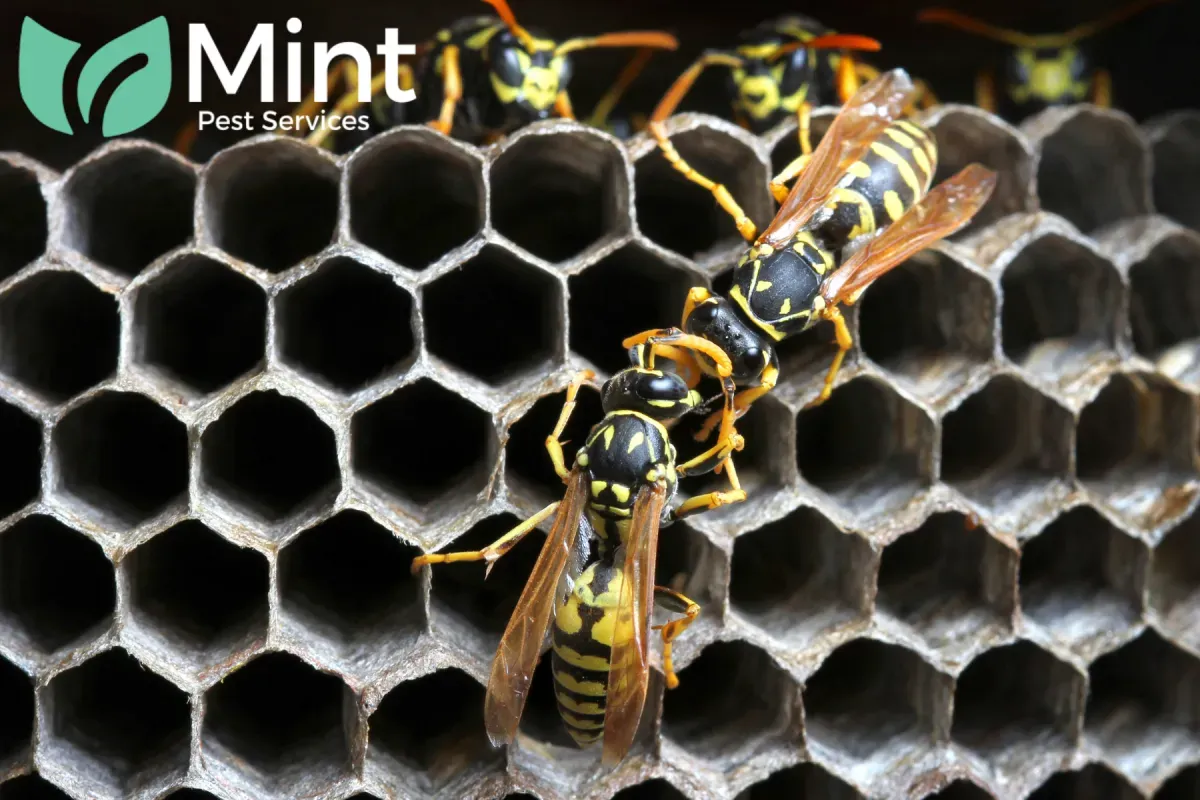
Before you take any action, you need to know exactly what kind of insect you are dealing with. Treating an open paper comb is a completely different task than dealing with a hidden yellowjacket colony. Misidentifying the nest can lead to dangerous surprises once the treatment application begins.
Stinging Insect Nest Comparison
| Insect Type | Nest Material & Appearance | Typical Locations | Aggression Level |
| Paper Wasps | Open, exposed umbrella-shaped comb; looks like grey paper. | Eaves, door frames, porch ceilings. | Moderate (Stings when cornered). |
| Yellowjackets | Enclosed grey paper sphere with a single entry hole; or hidden underground. | Wall voids, tree roots, old rodent burrows. | High (Highly territorial, will chase). |
| Hornets | Large, teardrop-shaped enclosed paper structure. | Tree branches, thick bushes, utility poles. | Extreme (Defends nest aggressively in groups). |
| Mud Daubers | Hardened mud tubes or finger-like dirt structures. | Stucco walls, garage rafters, brick crevices. | Low (Rarely stings, solitary). |
Learning these visual cues is the first step toward a successful remediation. If you notice a nest that looks enclosed or is built directly into a wall crevice, it is best to avoid a DIY approach entirely. Those structures often contain thousands of insects ready to defend their queen at a moment’s notice, making it nearly impossible to figure out how do you safely remove a wasp nest without getting stung on your own.
Step-by-Step Guide to Safe DIY Removal
If you have confirmed that you are dealing with a small, easily accessible paper wasp nest, you can choose to handle it yourself by following a strict safety protocol. You must never rush into this process during daylight hours when the insects are fully awake, active, and foraging for food.
The 5-Step Nighttime Elimination Process
- Time Your Approach Perfectly: Wait until at least two hours after complete darkness. During the night, all the foraging insects return to the nest, and their body temperatures drop, making them incredibly slow and sluggish.
- Layer Your Protective Clothing: Wear heavy clothing, including a thick hooded sweatshirt, long pants tucked straight into your socks, sturdy boots, leather work gloves, and safety goggles. Cover as much exposed skin as possible to prevent stings.
- Switch to a Red Light Source: Stinging insects cannot see red light waves effectively. If you point a bright white flashlight directly at a nest, they will view it as an immediate threat and fly straight toward the light source. Cover your flashlight lens with red cellophane to remain hidden.
- Apply Treatment From a Safe Distance: Stand at least 15 feet away from the nesting site. Aim a specialized knockdown aerosol directly into the main center opening of the comb to neutralize the colony immediately.
- Wait Before Scraping the Nest Down: Do not try to knock the nest down right after you apply treatment. Leave it completely alone for 24 to 48 hours to ensure any insects out traveling the next morning contact the residual barrier when they return.
Debunking the “Water Hose Knockdown” Myth
A highly dangerous piece of advice often shared online is that you can get rid of a nest by blasting it with a high-pressure stream of water from your garden hose. This is a massive mistake that often leads to severe injury. Water will not drown a colony on contact; instead, it instantly destroys their paper home and sends hundreds of angry, disoriented insects straight into the air.
Because these flying pests can move much faster than a human can run, they will quickly trace the stream of water back to the source. Whoever is holding the hose will likely face multiple painful stings before they can find shelter. Using water as a primary method of control is an invitation for an emergency and completely violates the rules of how do you safely remove a wasp nest without getting stung.
Equipment Specifications for Safe Pest Work
Knockdown Aerosols
A long-range aerosol actuator capable of firing a solid, pinpoint stream up to 20 feet. The formula must include instant paralyzing agents that drop insects on contact before they can take flight.
Eye Protection
Sealed polycarbonate safety goggles that form a flush, tight seal against your face. This prevents any dripping treatment application or falling insects from landing in your eyes during the process.
Stealth Lighting
An LED flashlight equipped with a dedicated red lens cover or an output wavelength between 620 and 750 nanometers. This ensures you can see your target clearly without alerting the colony to your presence.
Scraping Tool
A long-handled heavy-duty scraper or putty knife attached securely to an extension pole. This tool allows you to physically detach the dead nest while keeping your body a safe distance away from the contact zone.
Applying our WaspShield Protocol to solve this.
When dealing with a large infestation, or if you simply prefer not to take the personal risk, a professional team should handle the job. Our company values long-term prevention rather than quick fixes, ensuring your household remains safe. At Mint Pest Services, we provide honest, straightforward pest control services in Odessa, TX that focus on solving the root cause of your stinging insect issues without hidden fees or unnecessary upselling.
Our trained technicians approach every property with a comprehensive strategy that uses a safe, methodical approach to locate and eliminate nests. We start by mapping out the exterior of your home, checking hidden areas like attic vents, crawlspaces, and behind window shutters where queens love to build their homes. This detailed inspection ensures we do not leave any hidden colonies behind to rebuild.
When we treat the area, we rely on products that are eco-friendly and non-toxic to your family and pets. We know you want a home free of stinging pests, but we also know you value the health and safety of your household. Our targeted green and safe pesticides ensure the problem is solved cleanly, leaving your outdoor entertainment spaces completely safe for immediate use.
With more than a decade of experience handling the unique pest challenges of our region, we understand exactly how these colonies thrive and adapt. We apply a protective barrier around your eaves and rooflines that stops new queens from returning to rebuild their nests in the same spot next spring, delivering true peace of mind.
Navigating Local Stinging Pest Challenges
The dry, hot climate in our region plays a huge part in how active these pests become throughout the year. During a recent backyard inspection for a family, our team found that a small leak in an outdoor pool pump was drawing in dozens of thirsty yellowjackets every afternoon. When natural water sources dry up in the summer heat, residential areas become prime real estate for foraging colonies looking to survive.
If you are looking for dependable pest control in Odessa, it is important to choose a team that understands how our local weather drives pest behavior. Mild winters often mean that more fertilized queens survive the colder months, leading to much larger and more aggressive colonies early in the spring.
Our local roots give us a distinct edge when providing professional pest control. We see firsthand how fast a small paper comb under a patio roof can grow into a major headache for a homeowner. That is why we emphasize routine maintenance and early inspection to catch these issues before they turn into full-blown summer hazards.
Taking care of your property shouldn’t involve guesswork or risky DIY attempts that end in painful injuries. Choosing the right partner for Odessa pest control means you get an experienced team that treats your house with the same care and respect they would show their own home. We prioritize safe, effective treatment applications so your family can enjoy the outdoors confidently.
People Also Ask
Q: Will a wasp nest survive through the winter season?
No, the vast majority of the colony will naturally die off when the first hard freeze hits late in the year. The old queen and her worker insects do not survive the cold. However, newly mated queens will find warm, protected areas like wall insulation or loose tree bark to hibernate, emerging in the spring to build brand-new colonies.
Q: Can I use a heavy-duty trash bag to suffocate a live nest?
Attempting this is incredibly dangerous. Trying to pull a plastic bag over a live structure usually tears the delicate paper material, releasing the colony directly onto your hands, arms, and face before you can pull the drawstring shut.
Q: Do wasps remember human faces or hold grudges?
They do not recognize individual human features, but they do use a powerful pheromone tracking system. When a stinging insect feels threatened, it releases an invisible alarm pheromone into the air. This natural marker signals every nearby member of the colony to fly out and target the same individual.
Reclaim Your Yard With Total Confidence
You should be able to sit out on your back porch or work in your garden without constantly looking over your shoulder for stinging insects. If you are tired of worrying about how to protect your family, let our family look after yours. At Mint Pest Services, we combine professional, science-backed knowledge with a warm, neighborly approach to keep your home comfortable and pest-free all year long.
We avoid the complicated sales pitches and high-pressure tactics used by large, impersonal companies. Instead, we offer affordable, customized service plans designed specifically for your home’s unique layout, ensuring you only pay for what you truly need. Supporting local West Texas families and delivering consistent, high-quality service is at the core of everything we do.
Ready to enjoy a safe, stress-free backyard once again? Contact us today to secure your friendly, free estimate!