


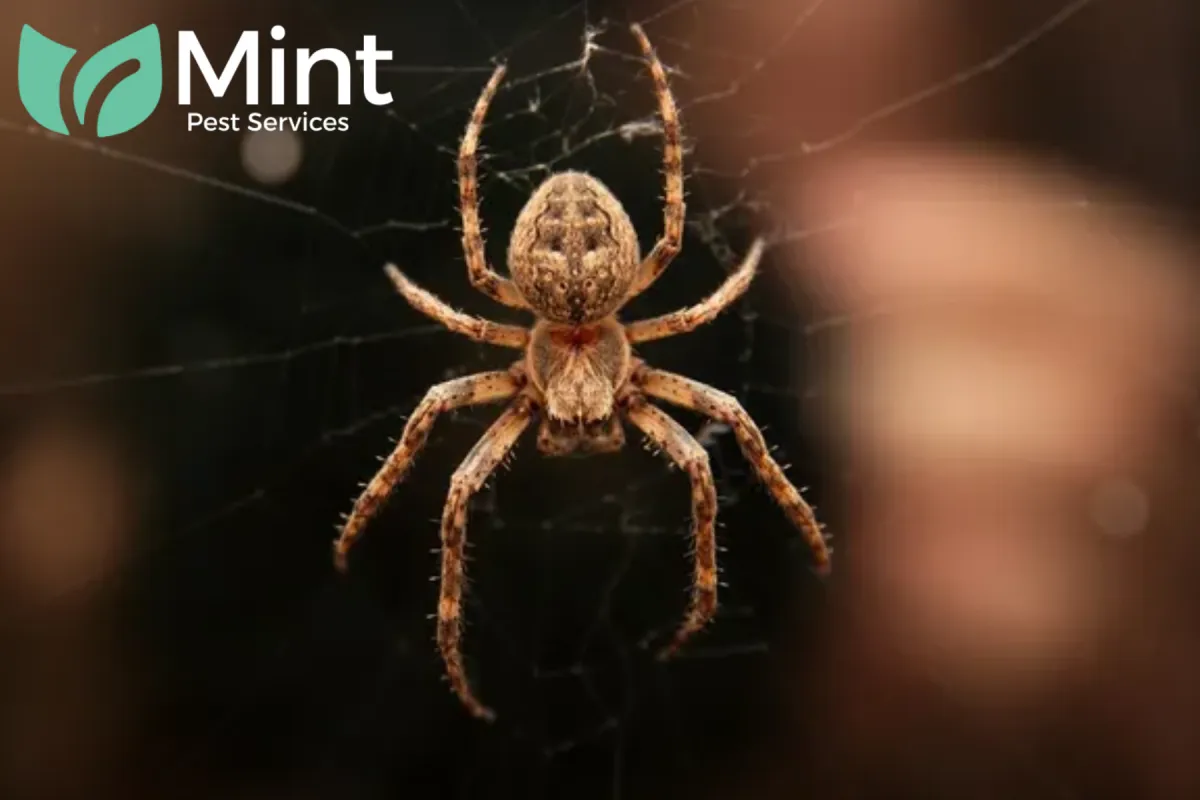
Spider sightings peak after general pest treatments because the sudden elimination of their primary food source, insects like ants, flies, and roaches, forces them to abandon their webs and travel across open surfaces to find food. This “predator-prey shift” makes previously hidden highly visible as they hunt for a dwindling meal supply.
The Biological “Hunger Drive”: Why Spiders Start Wandering
When a professional treatment clears your home of common crawling insects, it creates a biological vacuum. Spiders are efficient predators that usually stay tucked away in dark corners, high in the eaves, or behind furniture, as long as the food comes to them. Once that food source is eliminated by high-quality Midland pest control, their behavior changes fundamentally.
4 Reasons for Increased Post-Treatment Activity
- Forced Foraging: With no insects flying into their webs or crawling nearby, spiders must leave their “harborages” to actively hunt. This is why you suddenly see them in the middle of the floor or on your walls.
- Chemical Irritation: Many general pesticides act as excitants. These products make pests hyperactive, which can cause spiders to drop from ceilings or move out of wall voids where they were previously nesting.
- Mating Disruption: The agitation caused by a thorough treatment can sometimes trigger a “flight” response in male spiders. This leads them to wander more frequently in search of safety or a mate, especially in our West Texas service areas.
- Web Abandonment: If a treatment affects the structural integrity of a web or changes the environment of a corner, a spider will relocate to find a more “stable” spot.
General Sprays vs. Targeted Solutions
Many homeowners are surprised that a general “bug spray” doesn’t always stop immediately. This is because arachnids have a different physiology than the insects they eat. During a recent audit for a family in Midland, we explained that while the ants were gone immediately, the spiders required a more specialized approach to ensure effective results.
Comparing Treatment Efficacy
| Feature | General Pest Treatment | Specialized Spider Protocol |
| Primary Target | Ants, Roaches, Crickets, Beetles | Spiders, Scorpions, and Arachnids |
| Application Area | Baseboards and Entry Points | High Corners, Eaves, and Wall Voids |
| Biological Impact | Direct Ingestion/Contact through grooming | Long-term Residual Bonding to legs |
| Physiological Reach | Low (targeting low-crawlers) | High (targeting climbers and hangers) |
| Duration of Results | 30-60 Days | 90+ Days with specialized agents |
Debunking the “Tiptoe” Myth
The Myth: “If a spider walks across a treated baseboard, it will die just like a cockroach or an ant.”
The Reality: This is a major misconception in the industry. Spiders are difficult to kill with standard liquid sprays because they walk on “tiptoes.” Unlike insects, which have low-slung bodies that drag through the chemical, or those that groom themselves by licking their legs, they keep their bodies high off the ground.
Furthermore, spiders do not have the same grooming habits as roaches. To effectively manage them, pest control in Midland must use products that adhere to the tiny hairs on their legs or be applied directly to the voids where they hide.
Applying our Personal Service Protocol to Solve This
At Mint Pest Services, we know that a one-size-fits-all approach just doesn’t work for West Texas homes. To combat the post-treatment spike, we utilize our proprietary Personal Service Protocol. We don’t just treat the ground; we target the architectural “high points” where spiders actually live and wait for prey.
By combining this personal service with eco-friendly solutions, we ensure that we aren’t just killing the pests’ food; we are neutralizing it. As a Texas-owned, Texas-proud company, we use powerful, results-driven products that bond to the vertical surfaces and corners that spiders prefer. This method ensures that when they are “displaced” by the loss of their prey, they inevitably cross into a specialized residual barrier designed specifically for arachnid biology.
We back this thorough approach with our quick response guarantee. If the predator-prey shift in your home lasts longer than expected, we return to refine the barrier at no extra cost. We believe in honest, transparent service, meaning we will tell you exactly why you are seeing more activity and what we are doing to stop it for good. We want our neighbors to feel the peace of mind that comes with knowing their home is in the hands of professionals who truly care.
Technical Specifications: Arachnid Control Features
Cephalothorax
The fused head and thorax of a spider. Effective treatments must often reach the underside of this section or be absorbed through the legs to ensure a lethal dose.
Arachnicide
A specialized class of pesticides formulated with micro-encapsulated technology that sticks to the tiny hairs (setae) on a spider’s legs.
Micro-Encapsulation
A “timed-release” feature where the active ingredient is trapped in microscopic bubbles. This allows the product to last longer on porous surfaces like wood, brick, or siding in our West Texas service areas.
Hydrophobic Barrier
A treatment that resists water and humidity, which is essential for outdoor eaves where spiders frequently build nests and wait for flying insects.
People Also Ask
Why am I seeing more spiders a week after my service?
You are likely witnessing the “predator-prey shift.” Your pest control successfully removed the other bugs, and now the spiders are out in the open looking for a new meal. Because they are hungry, they are taking risks they wouldn’t normally take.
Will the spiders eventually leave on their own?
If their food source is gone, they will eventually move on or die of starvation, but our specialized treatments speed up this process by ensuring they contact a lethal barrier while they wander.
Are the spiders I see after treatment more dangerous?
No, they are just more active. However, because they are agitated and searching for food, they may be more likely to wander into high-traffic areas like bedrooms or bathrooms.
Does Mint Pest Services remove the webs, too?
Yes! A key part of our personal service involves “de-webbing” your eaves and corners. This removes the spider’s home and forces them to move across our fresh, eco-friendly solutions to find a new spot.
What is the best way to get rid of spiders for good?
The best approach is a combination of removing their food (general pest control) and treating their hiding spots directly. As a “Texas-owned, Texas-proud” provider, we emphasize routine maintenance to keep your home’s entire ecosystem in check.
Reclaim Your Home from Eight-Legged Hunters
The sight of a wandering spider doesn’t mean your pest control in Midland, TX, failed; it means your home’s ecosystem is changing. With the right strategy, this temporary spike in activity leads to a completely pest-free environment.
At Mint Pest Services, we aim to be your dependable local partner. We believe pest control should be personal, affordable, and environmentally responsible. Our decisions are guided by honest, transparent service and long-term prevention rather than quick fixes. When you engage with our brand, we want you to feel the confidence that your home, family, and pets are protected by knowledgeable professionals who treat your home like their own.
We stand out through our personal service, fast response times, and science-backed solutions delivered by local owners who personally oversee every service. Unlike large companies that use a one-size-fits-all approach, we tailor treatments to each property and prioritize your safety with our eco-friendly solutions.
Are you tired of seeing spiders “drop in” after your regular service? Contact us today to schedule your free estimate and experience firsthand.