


The most effective ways to prevent millipedes from returning after treatment are reducing outdoor moisture levels, removing excess organic ground cover, and sealing low-level entryways around your foundation. Because millipedes rely entirely on damp environments to survive, long-term control depends on changing their habitat rather than relying on repeated perimeter applications. Keeping your home dry and physically blocked stops them completely.
Homeowners often notice that a large population of many-legged pests can crawl along floorboards shortly after heavy rain or intense heat waves. If you are struggling with a recurring invasion, securing professional pest control in Greenwood can clear out the immediate population.
However, understanding the most effective ways to prevent millipedes from returning after treatment requires evaluating your home’s outdoor habitat. These invertebrates are highly sensitive to dry environments and cannot survive without constant access to moisture and decaying organic matter. Managing these pests involves looking closely at your home’s perimeter to remove the conditions that draw them inside.
Eliminating the Core Triggers: Moisture vs. Shelter
To stop these pests from invading your living spaces again, you have to break down what draws them toward your foundation. They do not wander indoors to bother you; they are simply following the scent of water and decaying organic matter.
Home Environmental Attractants
| Environmental Factor | Indoor Attractant Zone | Outdoor Harborage Zone | Prevention Focus |
| Moisture Levels | Basements, crawlspaces, leaky under-sink plumbing | Overwatered lawns, pooling gutters, leaking spigots | Regulate humidity below 50% and fix structural leaks |
| Shelter / Food Source | Damp cardboard boxes, decaying wood, potted plant soil | Thick hardwood mulch, leaf piles, rotting logs, grass clippings | Maintain a clean, cleared zone directly around the foundation |
| Entry Points | Floor drains, expansion joints, worn threshold sweeps | Siding gaps, basement vents, crawlspace access hatches | Apply high-grade silicone caulking and mesh barriers |
The 4-Step Post-Treatment Prevention Checklist
When looking into what are the most effective ways to prevent millipedes from returning after treatment, structural sealing and moisture adjustments are always the foundational steps. Incorporating routine property maintenance cuts off the access routes these soil-dwelling creatures use to enter your home. Relying on professional Greenwood pest control helps maintain a protective perimeter as the seasons change.
- Adjust Your Lawn Irrigation: Set your lawn sprinklers to water early in the morning so the sun can dry the top layers of soil before nightfall. Avoid overwatering zones that sit directly against your concrete foundation.
- Re-evaluate Landscaping Bed Placement: Ensure flower beds slope away from the house structure so rainwater flows out toward the yard instead of pooling against your lower bricks or siding.
- Keep Your Garage Floors Dry: Sweep out any standing water after heavy summer rainstorms and use fans to dry damp concrete corners where wandering bugs like to hide.
- Maintain Regular Inspections: Check low-lying entryways like sliding glass door tracks and basement windows every season to ensure weatherstripping remains intact.
Debunking the “Millipedes Destroy Home Foundations” Myth
A common industry misconception is that a large migration of these pests can damage or eat through the wood and concrete of your home’s foundation. This is entirely false. These creatures do not have wood-boring jaws; they do not bite humans, and they carry no structural threats to your property. They are harmless decomposers that spend their lives eating dead leaves and damp organic matter in nature.
When they move indoors in large groups, they are usually trying to escape drowning after heavy rain or seeking moisture during a severe drought. Once they step inside a dry house, they typically dehydrate and die within 24 to 48 hours because our indoor air lacks the high humidity they need to breathe. They are a major nuisance, but they will not harm your house.
Property Specifications for Long-Term Millipede Exclusion
Ground Cover Depth
Keep organic materials thin and away from siding to prevent deep, wet layers where pests can breed undisturbed.
Indoor Humidity Threshold
Maintain relative humidity below 50% in subterranean spaces using active dehumidifiers to stop pests from surviving if they do get inside.
Foundation Sealant Type
High-durability elastomeric caulking applied to concrete expansion cracks to allow natural home shifting while blocking entry paths.
Mesh Vent Screens
Fine stainless steel woven screen fabric installed securely over crawlspace and basement ventilation ports.
Applying our MilliShield Matrix to Solve This
At Mint Pest Services, we look at the whole picture to keep your home comfortable and pest-free. We use our years of experience working with local West Texas properties to build a protective shield around your house. To deliver the best results, we implement a detailed system built around our proprietary exclusion and moisture-management strategies. Our friendly local owners personally oversee this process to ensure your property is treated with the highest level of care.
First, we work with you to improve drainage around your concrete pathways and landscape borders. Our primary step is to ensure that downspouts and splash blocks direct water at least five feet away from the foundation so that water does not pool in the soil. Moving this water away prevents the soil against your home from turning into a wet breeding ground for crawling pests.
Second, we analyze your organic landscape materials to eliminate potential food sources and shelters. We help you keep mulch depth to two inches or less and maintain a “dry zone” of at least 6 to 12 inches between mulch beds and the house siding. Homeowners must also regularly clear away fallen leaves, grass clippings, and wood piles that sit directly against the structure. This gap removes the damp bridge that millipedes use to travel from the dirt straight onto your home’s walls.
Finally, we physically secure your home’s entry pathways. Our team will seal cracks in the foundation and ensure window screens and door sweeps are tight-fitting to leave zero physical gaps open. Once the structural barriers are set, we apply a perimeter treatment using green and safe pesticides to give your home dependable protection.
Navigating Local Environmental Factors
The unique weather patterns in our area play a massive role in how pests behave. During a recent home property assessment for a resident in Greenwood, our technicians observed how shifting weather patterns cause massive migrations of soil-dwelling pests. When local clay soils shift between intense drought and unexpected downpours, it triggers a survival movement toward damp residential foundations.
When you are looking for dependable pest control in Greenwood, TX, you need a team that knows how our local soil conditions react to heavy downpours. When the ground gets completely soaked, these creatures are forced up out of the dirt to keep from drowning, causing them to climb onto warmth-retaining surfaces like patios and walkways.
Our neighborly team at Mint Pest Services knows exactly how to handle these seasonal migrations. Because we are local owners who treat every home as if it were our own, we can quickly pinpoint the exact spots where water pools on your lawn. We customize our treatment application to fit the specific layout of your yard, ensuring you get real, long-term protection without paying for things you don’t need.
People Also Ask
Q: Do millipedes lay eggs or build nests inside home walls?
No, they cannot successfully lay eggs or breed inside a normal home. They require constantly wet, decaying organic matter and damp soil to keep their eggs alive. Unless your home has a major plumbing leak, a flooded crawlspace, or severe structural rot, any pests that crawl inside will quickly die without reproducing.
Q: Why do I always find these pests curled up into a tight spiral?
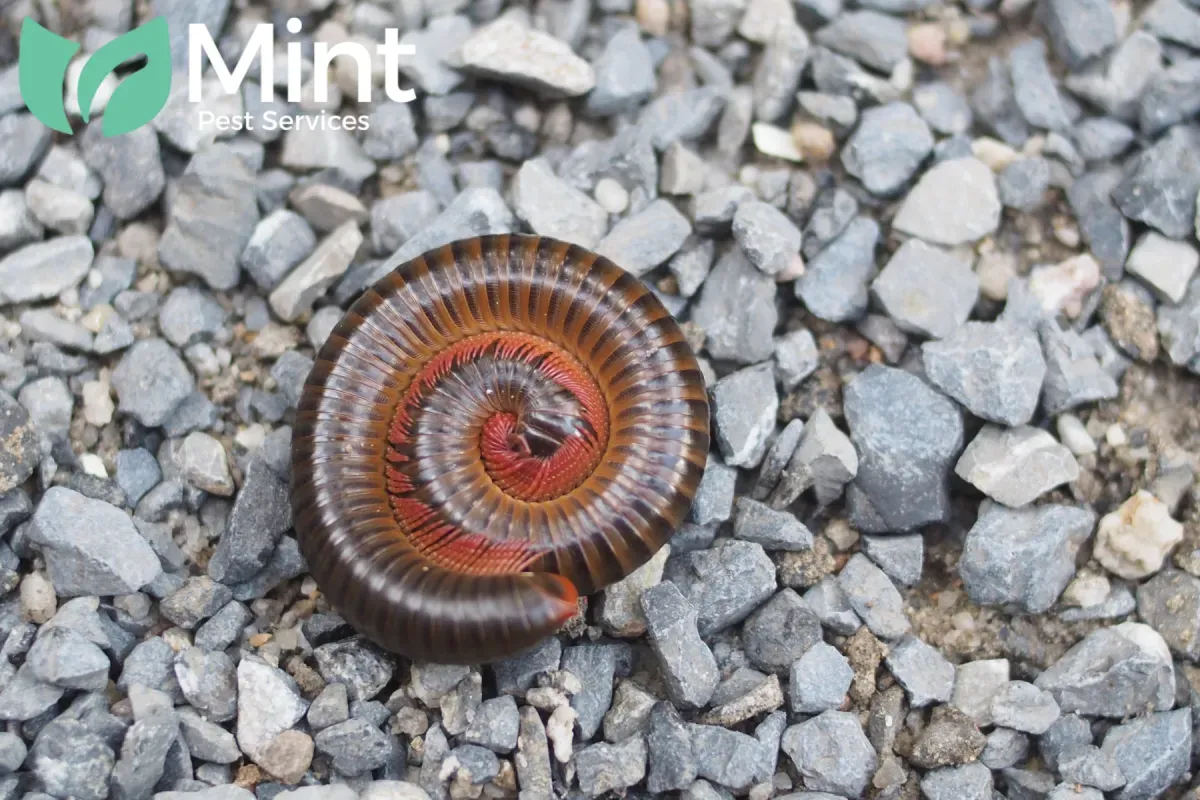
Curling into a tight spiral is their natural defense mechanism when they feel threatened, hurt, or begin to dehydrate. When they step onto dry indoor flooring, the lack of humidity causes them to lose moisture fast, and they naturally curl up as they pass away.
Q: Can over-mulching my flower beds cause pest numbers to grow?
Yes, placing thick layers of wood mulch against your house creates a perfect habitat. Deep mulch holds onto water for a long time and traps decaying organic matter, giving pests an endless food supply right next to your foundation walls.
Bring Long-Term Comfort Back to Your Home
You deserve to feel completely confident and comfortable in your house, without worrying about what might crawl in after the next rainstorm. At Mint Pest Services, we are proud to be your trusted local partner, combining professional pest knowledge with honest, transparent service. We believe in delivering personal, affordable care that focuses on long-term prevention rather than temporary, quick fixes.
If you are ready to stop chasing bugs and want to ensure long-term relief on your own property, we are ready to help. Contact us today to schedule your free estimate!