

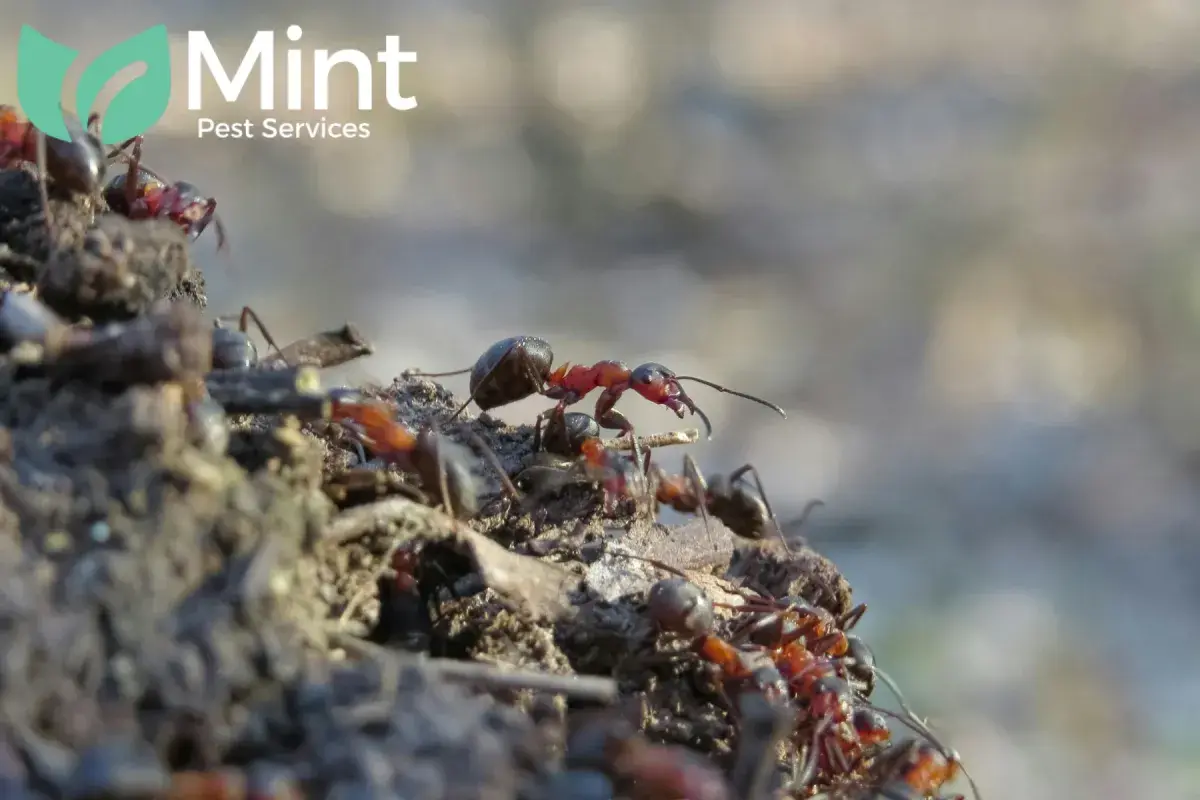

Ants keep coming back after DIY treatments because many products only kill visible ants without addressing the colony, queen, or hidden nesting sites. Food sources, moisture, and untreated entry points can also attract ants, allowing activity to return even after an initial reduction.
Finding ants on your kitchen counter or along a wall can be frustrating, especially after trying store-bought products or home remedies. You may clean the area, apply a treatment, and see fewer ants for a few days, only to find another trail later. Understanding why this happens can help you choose a more effective way to manage the problem.
Why Do Ants Keep Returning After DIY Treatments?
DIY treatments can reduce visible activity, but they do not always reach the source of an infestation. Ant colonies can contain many workers, and their nests may be hidden in places that are difficult to find.
Here are some common reasons ants return.
1. DIY Treatments Often Only Kill Visible Ants
The ants you see walking across a counter or floor are usually worker ants searching for food and water. Killing these ants may reduce what you see, but it does not necessarily affect the rest of the colony.
Other workers can continue leaving the nest to look for food. If the colony remains active, new ants may follow the same routes into your home.
This is why treating only the areas where ants appear may provide temporary relief instead of resolving the infestation.
2. The Colony and Queen May Remain Active
An ant colony depends on its queen to produce new ants. Worker ants search for food, care for young, and maintain the nest, while the queen continues her reproductive role.
If a DIY treatment kills some workers but leaves the colony undisturbed, ant activity may continue. The number of ants you see can decrease without the underlying problem being resolved.
A more complete ant control approach needs to consider where the colony is located and which treatment methods are suitable for the ant species.
3. Hidden Nests Are Difficult to Locate
Ants do not always build nests in obvious places. Some colonies are found outdoors, while others may nest in or around parts of a building.
Common nesting areas include:
- Wall voids and spaces behind cabinets.
- Gaps beneath flooring or near foundations.
- Soil around landscaping and tree roots.
- Areas beneath mulch, rocks, or outdoor debris.
- Damp spaces near plumbing or other moisture sources.
When homeowners treat only the visible trail, the nest may remain untouched. Ants can then continue moving through the same entry points or establish new trails.
4. Food and Water Continue Attracting Ants
Even after treatment, ants may return if they can still find food and moisture around the property. Small crumbs, sugary spills, pet food, open containers, and leaking pipes can all create attractive conditions.
Cleaning surfaces and storing food properly can help reduce these attractants. However, good sanitation alone may not resolve an established colony.
What Makes DIY Ant Treatments Ineffective?
Different DIY methods serve different purposes. Some kill ants on contact, while others are designed to attract ants and deliver bait. Knowing how they work can help explain why a particular treatment may not solve the problem.
Comparison of Common DIY Ant Treatments
| DIY Method | Intended Purpose | Possible Limitation |
| Direct-contact products | Kill ants in treated areas | May not reach the colony or hidden nests |
| Ant bait stations | Attract ants that may carry bait toward the colony | Results depend on bait acceptance, placement, and ant species |
| Homemade remedies | Discourage or kill ants in specific areas | May provide only temporary or localized results |
| Cleaning ant trails | Remove food residue and trail signals | Does not eliminate an established colony |
| Sealing visible gaps | Reduce access through certain openings | Other entry points may remain undiscovered |
Why Ant Bait Does Not Always Work
Ant bait is designed to attract ants so they can feed on it and, depending on the product, carry it back toward the colony. However, ants may ignore bait if they do not find it appealing or if other food sources are easier to reach.
Placement also matters. Bait stations need to be used according to product directions and placed where the target ants can find them. Different ant species may have different food preferences, so one bait may not work equally well for every infestation.
Avoid applying other products directly around bait stations unless the product label or a pest control professional says it is appropriate. Some treatments can interfere with ant activity around the bait.
How Do Ants Find Their Way Back Into a Home?
Ants are skilled at finding food and following established routes. Even after you remove a visible trail, other ants may continue searching for resources around your property.
Ants Follow Scent Trails
When worker ants find food, they can leave pheromone trails that help other ants follow the same route. These scent signals make it easier for ants to return to a food source.
This is why you may see ants traveling along the same wall, window, or countertop. Wiping the area can remove food residue and trail signals, but it will not necessarily affect the nest.
Small Entry Points Allow Continued Access
Ants can enter through small gaps around windows, doors, pipes, vents, and foundations. Some openings may be difficult to notice during a quick inspection.
If these access points remain open, ants from nearby colonies may continue entering the property. Finding and addressing likely entry points is an important part of reducing recurring activity.
Outdoor Colonies Can Send Ants Indoors
An ant problem inside the home may have an outdoor source. Colonies can develop in soil, landscaping, mulch, and other areas close to a building.
For homeowners researching pest control in Greenwood, TX, checking both indoor and outdoor conditions is important. Treating an indoor trail without considering nearby nesting areas may leave part of the problem unaddressed.
Common Signs Ants May Still Be Entering From an Active Colony
Watch for these signs:
- Ants repeatedly appear along the same walls or countertops.
- New trails form near windows, doors, or plumbing.
- Ants continue appearing after visible activity decreases.
- Ants gather near food storage or moisture sources.
- Activity returns in areas that were previously treated.
These signs do not always reveal the exact location of a nest, but they can help identify areas that need closer attention.
How Can Homeowners Stop Ants From Coming Back?
Homeowners can make their properties less attractive to ants by reducing food, moisture, and access points. These steps support treatment and help limit conditions that encourage recurring activity.
1. Remove Food Sources
- Store pantry items in sealed containers.
- Wipe up spills and crumbs promptly.
- Keep pet food in covered containers when not in use.
- Clean food preparation areas regularly.
- Use trash bins with secure lids.
2. Address Moisture Problems
- Repair leaking faucets and pipes.
- Check beneath sinks for damp areas.
- Avoid leaving standing water around the home.
- Keep drains and surrounding surfaces clean.
- Address drainage issues around the property.
3. Seal Potential Entry Points
- Inspect gaps around doors and windows.
- Check openings around pipes and utility lines.
- Repair damaged weatherstripping.
- Seal suitable cracks and openings.
- Ask a professional to assess access points that are difficult to reach.
4. Maintain Outdoor Areas
- Remove unnecessary debris near the foundation.
- Keep vegetation from growing directly against the structure.
- Check landscaping for visible ant activity.
- Avoid leaving food scraps or open containers outdoors.
- Address moisture buildup where practical.
Homeowners looking into Greenwood pest control should remember that prevention involves more than treating visible ant trails. Reducing food and moisture sources, sealing suitable entry points, and monitoring areas with previous activity can help support a more complete approach.
5. Monitor Areas Where Ants Previously Appeared
Pay attention to locations where you regularly noticed ant trails. If activity returns, record where the ants appear and whether they are following the same route. This information can help a pest control professional assess the source.
When Should You Consider Professional Ant Control?
Occasional ants may be manageable with basic cleaning and prevention. However, repeated activity can indicate that the colony, nesting area, or access points have not been addressed.
Consider a professional inspection when:
- Ants return after repeated DIY treatment attempts.
- Multiple rooms show signs of activity.
- Trails appear near wall openings or hard-to-reach spaces.
- Ants continue appearing despite removing food and water sources.
- You cannot identify where the ants are entering.
- The infestation keeps spreading to new areas.
If recurring ant activity continues despite cleaning and DIY treatments, professional ant control may help identify the source of the problem. A proper inspection can reveal possible nesting areas, entry points, and conditions that need attention.
What Professionals Check During an Ant Inspection
A professional inspection helps identify the conditions behind recurring ant activity. Technicians may evaluate:
- Ant identification: Determine the likely species because behavior and treatment needs can differ.
- Activity patterns: Follow visible trails and identify areas where ants are gathering.
- Possible nesting sites: Check likely indoor and outdoor locations.
- Entry points: Look for gaps and openings that allow ants to enter.
- Food and moisture sources: Identify conditions that may be attracting ants.
- Treatment options: Recommend suitable methods based on the inspection findings.
Homeowners searching for an exterminator in Greenwood, TX may benefit from an inspection that considers both indoor ant activity and possible outdoor nesting areas. Identifying these factors helps determine which treatment options are appropriate.
DIY Ant Treatments vs. Professional Services
| Consideration | DIY Approach | Professional Approach |
| Ant identification | Relies on the homeowner’s observations | Includes an assessment of ant activity |
| Nest location | May be difficult to identify | Inspection focuses on likely nesting areas |
| Treatment selection | Based on available products and labels | Based on inspection findings and ant behavior |
| Entry point assessment | Often limited to visible gaps | Can include a broader property inspection |
| Follow-up | Homeowner checks for returning activity | Follow-up may be available depending on the service plan |
Understanding Ant Control: Important Terms
Knowing a few common pest control terms can make it easier to understand why ants return and what a treatment plan is designed to address.
- Ant colony: A group of ants that live and work together, usually with reproductive ants and workers performing different roles.
- Queen ant: A reproductive member of the colony responsible for laying eggs.
- Worker ants: Ants that search for food, care for young, and maintain the colony.
- Pheromone trail: A scent signal ants leave behind to help other ants follow a route.
- Ant bait: A product designed to attract ants so they can feed on it and, depending on the formulation, carry it toward the colony.
- Nesting site: A location where ants establish a colony and raise their young.
- Integrated Pest Management (IPM): An approach that combines inspection, monitoring, prevention, and appropriate control methods.
Common Ant Control Myth: Killing Visible Ants Eliminates the Entire Colony
Myth: If you kill all the ants you can see, the infestation is gone.
Fact: Visible worker ants are only part of a colony. Other ants may remain in hidden nesting areas, and the queen may continue producing more workers.
This explains why ant activity can return after a homeowner treats a countertop, floor, or visible trail. The treatment may reduce the number of ants in that area without reaching the colony.
A better approach considers the ant species, nesting location, food sources, and entry points. Addressing these factors helps create a more complete plan than focusing only on the ants that are easy to see.
Applying Our Personalized, Eco-Friendly Ant Control Solutions
At Mint Pest Services, we believe treatment recommendations should be based on the needs of each property. Our approach focuses on personalized solutions, Green and Safe Pesticides, and cost-effective recommendations rather than applying the same treatment to every home.
Inspecting the Property and Identifying Ant Activity
The first step is understanding where ants are appearing and what may be attracting them. A property assessment can help identify activity patterns, possible nesting areas, food sources, moisture concerns, and entry points.
This information helps guide treatment decisions. It also gives homeowners a clearer understanding of why ants may keep returning.
Choosing Personalized Treatment Options
Different ant species and property conditions may require different treatment methods. Mint Pest Services considers the inspection findings when recommending an appropriate plan.
Our approach uses Green and Safe Pesticides and treatment applications selected for the property’s needs. We focus on applying treatment where appropriate instead of recommending unnecessary services.
Supporting Treatment With Prevention
Treatment is only one part of managing recurring ant activity. Reducing food and moisture sources, addressing suitable entry points, and keeping problem areas clean can support the overall plan.
We explain practical steps homeowners can take and provide recommendations based on the conditions found during the inspection.
Providing Cost-Effective, Ongoing Support
We understand that homeowners want dependable service without paying for treatments they do not need. That’s why Mint Pest Services emphasizes transparent pricing, honest recommendations, and cost-effective solutions.
As a locally owned company serving West Texas, we value personal service and clear communication. Our goal is to help customers understand their options and choose a plan that fits their property and concerns.
People Also Ask About Ants Returning After DIY Treatments
Why do ants keep coming back after I kill them?
Killing visible ants does not necessarily eliminate the colony. Other workers may remain active in the nest and continue searching for food and water.
Does killing worker ants get rid of the entire colony?
No. Worker ants are only one part of the colony. The queen and other ants may remain in the nest, allowing activity to continue.
Why do ants return after using ant bait?
Ants may not accept the bait, the placement may not be suitable, or competing food sources may be more attractive. Different ant species can also respond differently to bait products.
How long does it take to get rid of an ant infestation?
The timeline depends on the ant species, colony location, infestation size, and treatment method. Some situations may require monitoring and follow-up rather than a single treatment.
Can ants return after professional treatment?
Yes. Ants may return if nearby colonies remain active, new ants find their way inside, or conditions attracting them have not been addressed. Continued activity should be evaluated to determine whether additional steps are needed.
Should I clean ant trails after treatment?
Cleaning food residue and visible trails can help reduce attraction. However, follow any instructions provided by your pest control professional about cleaning treated areas.
Get Help With Recurring Ant Problems
If ants keep returning despite your efforts, the problem may involve more than the visible trails inside your home. The colony, hidden nesting sites, food sources, and entry points all need to be considered.
Mint Pest Services offers personalized recommendations, environmentally friendly treatment options, and straightforward service. Our team can help assess recurring ant activity and explain practical next steps for your property.
Call us today to request a free estimate and discuss your concerns with our team.