


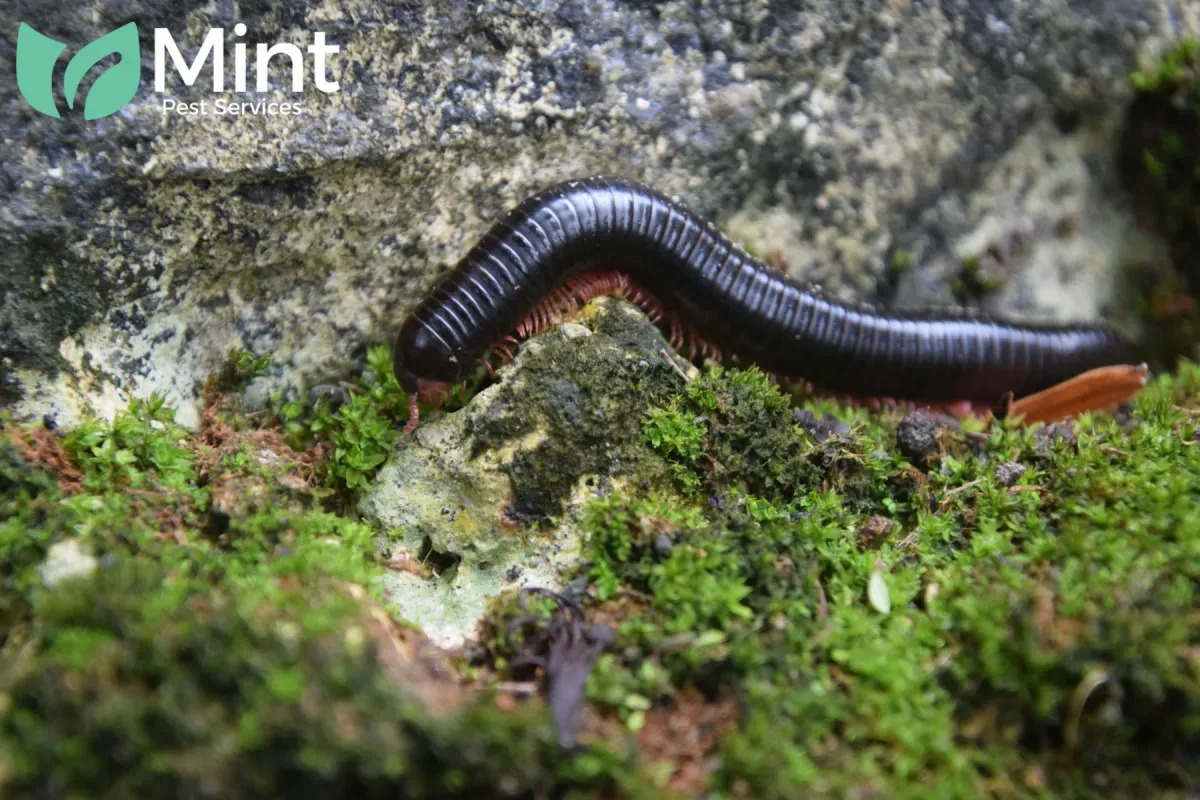
Millipedes invade homes and basements during periods of extreme drought because they rely heavily on environmental moisture to prevent lethal drying out. As topsoil, decaying leaf litter, and garden mulch dry out under intense heat, millipedes migrate inward toward subterranean concrete foundations, damp basements, and humid crawl spaces in search of cool, moist shelter. This emergency movement protects them from high heat, but it often drives thousands of unwanted pests right across your doorstep.
Natural Outdoor Habitats vs. Indoor Migration Zones
Understanding the operational differences between outdoor soil conditions and indoor moisture pockets highlights why millipedes shift inside during long dry spells.
| Parameter / Feature | Natural Outdoor Habitats | Indoor Migration Zones |
| Primary Environment | Damp topsoil, leaf mold, wood piles, and organic mulch | Subterranean basements, slab cracks, and crawl spaces |
| Moisture Levels | High during rainfall; drops to zero during drought | Elevated due to slab moisture, plumbing, and sump pits |
| Temperature Profile | Highly volatile; subject to severe surface heat | Cool, stabilized subterranean microclimates |
| Desiccation Risk | Extreme during hot, rainless periods | Low; high indoor humidity prevents fluid loss |
| Primary Food Sources | Decaying plant matter, fungi, and damp soil debris | Organic dust, cardboard glue, and houseplant soil |
| Control Approach | Perimeter barrier applications & soil moisture adjustments | Void dusting, micro-crack sealing, and dehumidification |
4-Step Process: How Millipedes Discover and Enter Basements
- Topsoil Drying Triggers Mass Migration
As groundwater completely evaporates during extended dry periods, soil-dwelling pests abandon their drying outdoor homes in large numbers. Driven by basic survival, thousands of millipedes begin crawling across dry turf and concrete slabs looking for humidity. - Foundation Tracking and Cool Air Sensing
Insects follow faint scents of moisture and cool air escaping from subterranean structural gaps. They crawl along exterior foundation walls, seeking any crack that offers relief from the scorching sun. - Infiltration via Micro-Crevices
Exploiting unsealed weep holes, expansion joints, low basement window wells, and utility pipe penetrations, pests push through tiny gaps. Their flexible bodies allow them to slip into dark indoor spaces easily. - Indoor Clustering and Trap Attachment
Once inside, pests gravitate toward sump pits, laundry rooms, and damp concrete floors. However, because normal home air is still much drier than deep soil, millipedes soon curl up and die in visible indoor clusters.
Applying Our Moisture Barrier Shield Protocol to Solve This
When severe drought forces soil pests out of garden beds and into your living area, passive indoor traps are not enough. At Mint Pest Services, we use specialized exclusion and moisture-management strategies to secure your property from the outside in:
- Improve Drainage and Water Control: We evaluate downspouts, splash blocks, and low garden spots to improve drainage around foundation lines, removing artificial moisture draws that attract crawling bugs.
- Manage Mulch Depth: Our team shows you how to manage mulch depth to two inches or less around perimeter flower beds, maintaining a dry zone of 6 to 12 inches between mulch and siding.
- Organic Debris Removal: We focus on organic debris removal by regularly clearing away fallen leaves, grass clippings, and wood piles that sit directly against your foundation.
- Structural Exclusion and Sealing: Through precise structural exclusion, we seal basement window gaps, door sweeps, expansion joints, and pipe penetrations to block physical entry routes.
- Establishing a Secure Barrier: Technicians apply green and safe pesticides along foundation bases and surrounding soil to build a secure barrier that stops migrating bugs before they ever cross your threshold.
Common Misconception: Millipedes Are Dangerous Insects That Eat Wood
The Myth: Millipedes are venomous bugs that bite humans, bore into wooden structural beams, and raise large families inside dry basements.
The Reality: Millipedes are non-venomous arthropods that do not possess stingers or fangs, and they cannot bite humans or pets. They feed exclusively on decaying plant matter, meaning they will never eat structural timbers, drywall, or furniture. Furthermore, millipedes cannot breed inside a clean home. Because indoor air is far drier than damp soil, entering bugs typically dry out and die within 24 to 48 hours unless they find an active plumbing leak.
Key Specifications of Millipede Anatomy and Behavior
- Diplopod Body Structure: Arthropods characterized by having two pairs of jointed legs on most body segments, giving them strong pushing power through loose soil.
- Hydrotactic Movement: An automatic physical drive that causes soil-dwelling bugs to move toward high humidity and damp air currents.
- Exoskeleton Permeability: A biological trait where their outer shell lacks a heavy waxy coating, causing them to lose body fluids rapidly when exposed to dry air.
- Spiral Defense Coiling: A natural protective reflex where millipedes curl into a tight, flat ring when threatened or dehydrated.
Why Property Owners Trust Professional Prevention
Dealing with hundreds of crawling bugs on your basement floor is unpleasant. Many homeowners try DIY remedies, only to find new groups arriving every afternoon because the dry soil outside continues driving them indoors.
During a recent home visit near the Grassland area in Midland, our technician found heavy landscape mulch stacked six inches deep right against unsealed brick weep holes. As summer drought baked the top layer of mulch, thousands of millipedes pushed through the weep holes into the lower level. By moving the mulch back, sealing the entry points, and applying treatment along the foundation, we resolved the issue completely.
Managing recurring invasions requires proven Midland pest control tactics designed for local West Texas soil conditions. When prolonged dry weather bakes the ground, simple surface sprays fail quickly, but a tailored maintenance plan keeps protective barriers active.
If persistent crawling pests are invading your lower level, hiring a reliable exterminator in Midland, TX gives you the peace of mind you deserve. Our friendly technicians deliver targeted treatment applications that keep your living space clean, dry, and comfortable.
Choosing a knowledgeable exterminator in Midland means you do not have to battle seasonal pests alone. Preventive care stops infestations before they start, saving you time, stress, and unnecessary cleanups.
People Also Ask
Why are there so many dead, curled-up millipedes in my basement?
Millipedes enter basements seeking damp air during hot, dry weather. Because normal indoor air lacks the heavy humidity of outdoor soil, they dehydrate within 24 to 48 hours and naturally curl into tight spirals as they die.
Do millipedes bite people or pets?
No. Millipedes do not bite, sting, or carry diseases. However, handling them directly can leave a mild defensive fluid on your hands that may irritate sensitive skin or eyes if rubbed.
How do millipedes get through concrete foundation walls?
They do not chew through concrete. Instead, they squeeze through tiny existing gaps around basement window frames, door thresholds, expansion joints, weep holes, and utility pipe openings.
Will running a dehumidifier help stop indoor millipedes?
Yes. Keeping indoor humidity below 50% speeds up the drying process for any stray pests that slip inside, making your basement completely unlivable for moisture-seeking bugs.
Protect Your Basement with Mint Pest Services
At Mint Pest Services, we believe pest management should be personal, affordable, and environmentally responsible. Your home is your sanctuary, and you should never have to worry about crawling pests taking over your basement during a drought. As a locally owned West Texas business, our friendly team combines science-backed solutions with neighborly care to give you complete peace of mind.
Whether you need targeted exclusion work during a dry spell or complete year-round home protection, we are here to help with transparent pricing, fast response times, and honest recommendations. If pests ever return between our scheduled visits, so do we, at no extra cost to you.
Ready to secure your home against seasonal invaders? Contact us today to schedule your free estimate!